Why Generic D365 F&O Configuration Fails Food Manufacturers

D365 F&O food manufacturing implementations fail more often than they should. Not because the platform cannot handle it. Dynamics 365 Finance and Supply Chain Management has deep, native capabilities for process manufacturing, batch management, catch weight, formula management, and lot traceability. The platform can absolutely do this. The problem is that most configurations are built by people who learned D365 in discrete manufacturing environments, then try to apply the same approach to a food plant. And food manufacturing is a completely different animal. Sometimes literally!

A configuration that works perfectly for a company making metal brackets will quietly fail a company making frozen pizza. Not in a dramatic, system-down way. In the slow, expensive way where your warehouse team is doing manual adjustments on every receipt, your quality team is tracking allergens in a spreadsheet, and your production planners cannot scale a recipe without creating a new BOM every time.

This blog is for the IT leader at a food or beverage manufacturer who is either about to start a D365 F&O implementation or is mid-project and starting to notice the expensive ERP might not quite fit how their plant actually operates.


The D365contractors.com community exists to serve D365 ERP customers who want to beef up their internal capability and drive projects forward internally. Chat with us today about our vetted consultants who are ready to jump in and help:

BOOK A FREE DISCOVERY CALL


Why D365 F&O food manufacturing is fundamentally different

Just to state the obvious first. Discrete manufacturing is relatively predictable. You put in 4 parts, you get 1 product. The bill of materials is fixed. The yield is consistent. The product does not expire next Tuesday.

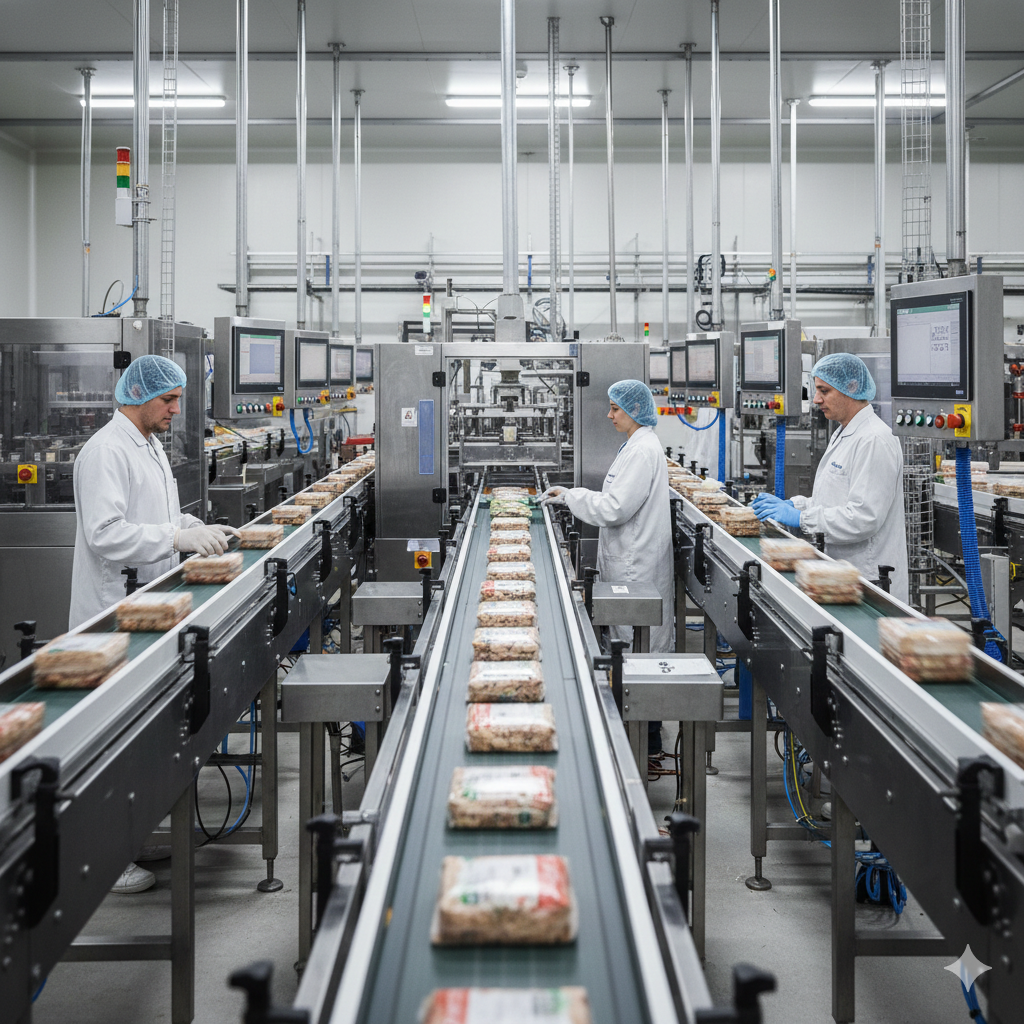
D365 F&O food manufacturing does not work that way. You put in ingredients that vary by season, supplier, and moisture content. Your yield changes based on temperature, humidity, and how long the batch sat before processing. You produce co-products and by-products that have their own value, their own inventory, and their own compliance requirements. Your product has a shelf life measured in days or weeks, not years. And if something goes wrong, you need to trace every ingredient back to the supplier lot within hours.

The core difference is variability. Discrete manufacturing optimizes for consistency. Food manufacturing manages variability. And if you are growing, harvesting, or packing fresh produce, the variability goes up another level. Your inventory is literally alive. Shelf life is measured in days. Grading and quality classification happen at intake and can change the value of your inventory in real time. A shipment of strawberries graded as premium Tuesday morning might be reclassified by Thursday. Your packing configurations change based on customer requirements, seasonal availability, and what the field actually produced that day.

D365 has the tools to handle all of this beautifully, if they are configured by someone who understands what variability looks like on a food production floor. If they are configured by someone who learned D365 in a discrete environment, you get a system that expects consistency and breaks every time reality does not cooperate.

The 5 areas where generic D365 configuration breaks food manufacturers

These are the five areas where I see the most pain at food and beverage companies running D365. They are all areas where the platform has strong native capabilities for D365 F&O food manufacturing, but where generic configuration misses the mark.

1. Receiving and catch weight. In food manufacturing, you rarely receive exactly what you ordered. You order 10,000 lbs of chicken breast and you receive 9,847 lbs because that is what the truck weighed. You order 500 cases of tomato paste and the actual weight per case varies by 3-5%. Catch weight handling in D365 allows you to manage inventory in dual units of measure (cases and pounds, for example) and reconcile the difference. But if catch weight is not configured correctly, or if it is skipped entirely because the consultant was not familiar with it, your receiving team is manually adjusting every single receipt. That is hours of labor per week and a growing inventory accuracy problem.

2. Production and formula management. A bill of materials in discrete manufacturing is fixed. A formula in food manufacturing is not. Recipe scaling, ingredient substitution, potency-based calculations, co-products and by-products, batch balancing. These are all native D365 capabilities within the process manufacturing module. But if your implementation was configured using standard BOMs instead of formulas, you lose all of that flexibility. Your production team ends up creating a new BOM for every batch size variation, which is as tedious as it sounds and about as error-prone as you would expect.

3. Inventory management and shelf life. Food products expire. Ingredients expire. This sounds obvious, but you would be surprised how many D365 configurations at food companies do not have shelf life tracking properly implemented. Best-before dates, FEFO (first expired, first out) picking strategies, shelf life advice periods for customers, quarantine rules for incoming materials. All of this exists natively in D365. If your warehouse is running FIFO instead of FEFO because nobody configured the shelf life parameters, you are shipping older product when you should be shipping product that expires sooner. Your customers will notice. Your quality team will notice. Your waste numbers will definitely notice. For fresh produce companies, this is even more critical. A pallet of leafy greens with a 5-day shelf life sitting behind a pallet with a 3-day shelf life because the system is not picking by expiration date means product going to waste that should have shipped first. Multiply that across hundreds of SKUs and dozens of shipments per day and the financial impact adds up fast.

4. Costing and yield variability. In food manufacturing, your costs fluctuate with commodity prices, seasonal availability, and yield variability. A batch that should produce 5,000 units might produce 4,700 due to moisture loss or processing waste. If your costing configuration does not account for variable yield, co-product cost allocation, and by-product value, your CFO is looking at product profitability numbers that do not reflect reality. Making pricing and sourcing decisions based on inaccurate cost data is a fast way to erode margin without knowing it.

5. Compliance and traceability. Food safety regulations require full lot traceability from supplier to customer. If there is a recall, you need to identify every lot of every ingredient in the affected batch and every customer who received product from that batch. In minutes, not days. D365 has robust batch tracking and traceability capabilities, but they need to be configured with your specific compliance requirements in mind, whether that is FDA, FSMA, GFSI, or customer-specific audit requirements. A generic traceability setup will leave gaps that your quality team discovers during an audit. And audit day is a bad day to discover configuration gaps.


Why this happens even with good implementation partners

This is not a partner quality problem. It is a specialization problem. Most D365 implementation partners have deep experience in discrete manufacturing and they are very good at it. But D365 F&O food manufacturing is a different specialization. Process manufacturing, formula management, catch weight, allergen tracking, shelf life management, compliance traceability. These are not things you pick up by reading the Microsoft documentation over a weekend. D365 F&O food manufacturing configuration demands someone who has lived through the complexity of catch weight variances, yield fluctuations, and recall exercises in a real plant. A consultant who has done 15 discrete manufacturing implementations and zero food manufacturing implementations is not a bad consultant. They are a great consultant in the wrong context.

The talent pool for D365 consultants with genuine food and beverage experience is small. A VP at a major coffee company put it well: “There are not many true F&B experts. It is a small world with D365 specifically.” This means your implementation partner may not have food-specific expertise on their bench when your project needs it. Not because they are cutting corners. Because the people simply are not available through traditional staffing channels. We wrote about this talent dynamic in detail in our guide to hiring D365 F&O food and beverage consultants.


What food manufacturers should do differently with D365 F&O food manufacturing configuration

The good news is that every one of these configuration gaps is preventable. The platform handles food manufacturing well. The key is making sure the people configuring it have the right experience and the right information.

Demand food-specific experience during partner selection. Ask how many food or beverage manufacturers they have implemented D365 for. Ask which consultants on their proposed team have hands-on experience with catch weight, formula management, and process manufacturing. Generic manufacturing experience is not enough for D365 F&O food manufacturing. The questions in 5 questions to answer before you talk to any D365 F&O vendor will help you structure these conversations.

Bring in food-specific expertise where your partner has gaps. If your partner is strong on finance and general supply chain but light on process manufacturing, that is not a reason to switch partners. It is a reason to supplement with an independent contractor who has deep D365 food manufacturing experience for the specific modules that require it. Catch weight configuration. Formula management. Shelf life and traceability design. That is exactly the kind of targeted support the d365contractors.com community is built for.

Run discovery with your plant operations people in the room. The warehouse manager who deals with catch weight every day. The quality manager who runs mock recalls. The production planner who adjusts recipes based on ingredient potency. Not just the VP who oversees them from an office two buildings away. We covered this in depth in D365 F&O discovery: where your implementation is won or lost.

Test with real food manufacturing scenarios. Your UAT should include a full batch production run with variable yield, a catch weight receipt with actual weight variances, a mock recall tracing ingredients back to supplier lots, and a shelf life scenario where product approaching expiration needs rerouting. If your test scripts do not cover these, you will discover the gaps in production. And production is the most expensive testing environment you have.


Getting D365 F&O food manufacturing right is a preparation problem

The food manufacturers who get the best results from D365 are the ones who recognize early that their implementation requires food-specific expertise, food-specific discovery, and food-specific testing. They do not assume that a standard manufacturing configuration will work. If you are about to start a D365 implementation at a food or beverage company, assess whether your project team has the food manufacturing expertise to configure the areas that matter most. If you are already mid-implementation and starting to see configuration that does not match how your plant operates, it is not too late to bring in targeted expertise. But the longer you wait, the more rework accumulates.

D365 F&O is an outstanding platform for food manufacturing. It just needs to be configured by people who understand food manufacturing. And in this niche, those people are worth their weight in catch weight.


If you are a food or beverage manufacturer heading into a D365 implementation, or mid-project and seeing configuration gaps in process manufacturing, catch weight, or traceability, book a free discovery call to learn more about our community of independent D365 consultants:
BOOK A FREE DISCOVERY CALL


About the Author

Ryan Carolan is the founder of d365contractors.com, connecting US manufacturing companies with pre-vetted, independent D365 Finance & Supply Chain Management experts. 14 years exclusively in D365 staffing. Hundreds of contractor placements into manufacturing implementations across the US.

Most weeks, he waffles on about stuff like this online.

Follow Ryan on LinkedIn →

The Hidden Costs of Staying on AX 2012: Why Food & Beverage Manufacturers Are Paying More by Delaying Their D365 Upgrade

Do We Really Need to Upgrade from AX 2012 Right Now?

So: You’re the VP of IT at a food manufacturer. Your CEO just asked if you “really need” to upgrade from AX 2012 to Dynamics 365.

You know the spreadsheet he’s looking at shows AX 2012 as the cheaper option. Stay put, avoid disruption, keep the budget flat.

But here’s what that spreadsheet doesn’t show: the warehouse supervisor who spent three hours yesterday manually reconciling inventory because the system froze during wave picking. The finance team that closes the month five days slower than your competitors. The $180,000 you’ll spend this year on AX contractors who charge premium rates because of those 174 customizations…

AX 2012 isn’t just old. It’s quietly expensive in ways that never make it into the cost comparison deck.

This article breaks down the real financial impact of delaying your D365 upgrade, especially for food and beverage operations dealing with catch-weight, lot tracking, cold storage, and the other lovely complexities that make the industry special.

Infographic showing an iceberg labeled “Direct AX 2012 Costs” above water and a large section of hidden costs below the surface, including warehouse productivity loss, premium contractor rates, finance inefficiency, compliance risk, technical debt, and talent scarcity. Branded with d365contractors.com.
The true cost of staying on AX 2012: most F&B manufacturers only see the visible fees, while hidden operational losses and risks make upgrades far more expensive to delay.

Want to get access to the best independent D365 consultants for your food & beverage project? Let’s talk.

GET FRACTIONAL D365 TALENT  

Why Are So Many F&B Manufacturers Suddenly Talking About An AX Upgrade?

Three things happened in the last 18 months that made the AX upgrade conversation unavoidable:

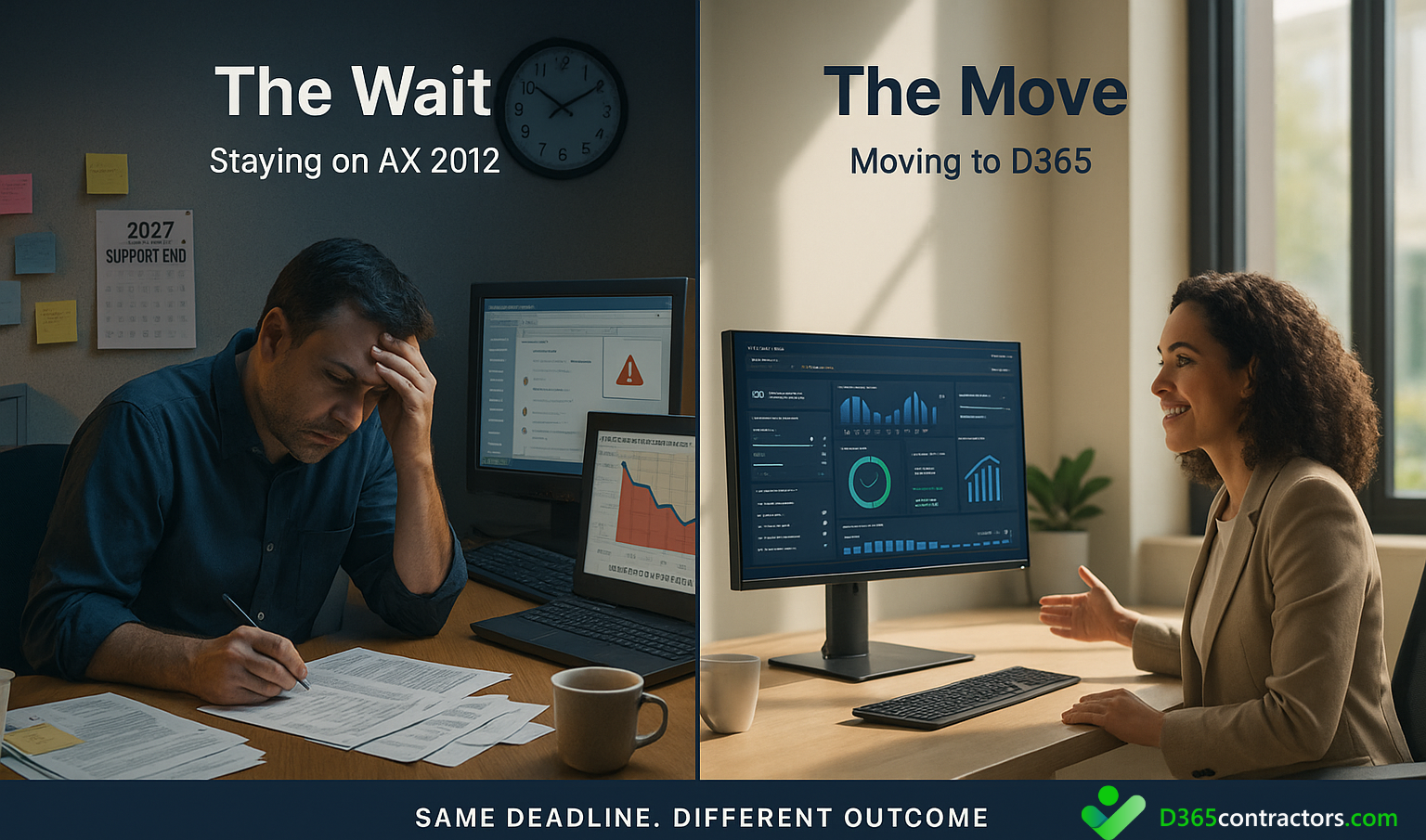
First, Microsoft ended mainstream support for AX 2012 in October 2021, and extended support ends in October 2027. That sounds far away until you realize a typical D365 implementation takes 12-18 months, plus another 6-12 months of planning before that. If you’re not having the conversation now, you’re behind.

Second, the AX talent market collapsed faster than anyone expected. Between 2022 and 2024, the number of available AX contractors dropped by roughly 40% based on our network data. The people who remain can charge whatever they want because they know you have limited options. Every F&B manufacturer we talk to mentions struggling to find AX resources at reasonable rates (but we can help!).

Third, and this one catches people off guard, your competitors already moved. The PE-backed F&B companies upgraded 18-24 months ago because their investors demanded it. They’re now operating with better warehouse efficiency, faster financial closes, and lower IT support costs. When your board sees competitor earnings calls mentioning “digital transformation” and “operational efficiency gains,” guess what question they’re going to ask you?

The conversation isn’t suddenly happening because Microsoft is pushing it (though they are). It’s happening because the economic case for staying on AX finally flipped from “probably fine for now” to “actively costing us money every month.”

AX 2012 Hidden Costs: Your Customizations Are a Monthly Tax

Food and beverage companies didn’t customize AX 2012 because they wanted to throw money at consultants. They did it because AX couldn’t handle their business out of the box. Although they were probably encouraged by their Partner too…

Catch-weight inventory. Date-controlled stock rotation. Shelf life calculations. Lot attributes for allergen tracking. Warehouse flows that account for temperature zones. EDI integrations with retailers who change their requirements every quarter. The list goes on.

Those customizations made AX work for you. But now they’re a tax you pay every single month.

Here’s what happens: Every custom object in your AX environment requires maintenance. When Microsoft releases a patch, someone has to regression test your customizations. When a developer leaves, the next person spends weeks trying to understand what the previous consultant built. If you want to add a new feature, you first have to figure out if it will break something else.

One F&B manufacturer we spoke with calculated they were spending $240,000 annually just maintaining customizations that had been built between 2013 and 2016. Not improving them. Not adding capabilities. Just keeping them working.

The problem compounds over time. The longer you stay on AX, the more technical debt accumulates. The eventual upgrade becomes more expensive because you have more custom code to refactor or rebuild.

Why Are AX Contractors So Expensive Now?

Remember when finding an Dynamics AX resource was relatively straightforward? Those days are gone.

The AX 2012 talent pool is shrinking fast. Most of the ERP talent in this space want to work with D365 now, or they’re going independent (and don’t care as much if the rate is fair!). The result is basic supply and demand economics, except the supply is disappearing and the demand is concentrated among companies who desperately need help.

We track contractor rates daily at d365contractors.com. Five years ago, a solid AX technical resource might have been $120 per hour. Today, that same skillset commands $175 to $200, sometimes more. Not because the work got harder, but because the person doing it knows they’re one of the last people who can (and is still willing to) do it.

Here’s the bigger issue: Many AX contractors now charge senior-level D365 rates for legacy support work. They’ve correctly figured out that companies with aging AX systems are in a bind. You can’t easily move to D365 overnight, so you’re stuck paying premium rates for maintenance on a system that’s losing value every month.

For food and beverage companies with heavily customized environments, this talent scarcity hits harder. You don’t just need any AX person. You need someone who understands manufacturing, ideally your specific segment. Finding an AX resource who knows catch-weight and understands how GS1 compliance works in a cold storage environment? Good luck with that. (But we can help!)

Why Is Our Warehouse Performance Getting Worse on AX?

If you’re running a food and beverage operation with any complexity in the warehouse, you’ve probably noticed AX 2012 struggling to keep up. AX performance is an issue for most.

Temperature-controlled storage across multiple zones. High-volume picking during peak season. Mixed-unit inventory where the same item exists as cases, each, and pallets. Catch-weight receiving where every incoming pallet needs to be weighed and recorded. Supply chain windows measured in hours, not days.

AX 2012 was built before this level of warehouse complexity became standard in F&B. The result is systems that work fine until they don’t.

The symptoms show up in consistent ways: Mobile scanners timing out during picks. Slow replenishment calculations that leave pickers waiting. Outbound wave processing takes 15 minutes when it should take one. Picking lists that freeze and require someone in IT to clear stuck records. Workers who’ve learned to override the system because it’s faster than waiting for it to work properly.

One operations director told us his warehouse accuracy dropped to 91% because pickers stopped trusting the system’s location recommendations. They’d been burned too many times by stale data, so they started using their own tribal knowledge instead of following system guidance.

The cost here is measurable. Take a facility with 50 warehouse workers. If AX performance issues cost each worker 10 minutes per shift, that’s 8.3 hours of lost productivity daily. At a fully loaded labor rate of $25 per hour, you’re losing about $208 per day. Over a year, that’s $54,000 in wasted warehouse labor.

That’s just one facility. Many F&B companies run multiple warehouses.

Why Does Month-End Close Take So Long?

In food and beverage manufacturing, finance operates under intense pressure. Margins are thin, typically between 2% and 8% depending on the segment. Inventory turns fast. Waste, spoilage, and write-offs need real-time visibility to prevent them from destroying profitability. Retailer chargebacks show up fast and require immediate investigation.

AX 2012 makes all of this harder than it should be.

Finance teams report consistent problems: Financial dimensions that break when someone modifies them incorrectly. Manual reconciliations between AX and the WMS because the integration doesn’t sync properly. Month-end close processes that take a week instead of three days. Cost accounting that can’t accurately track ingredient costs through complex production processes. Poor visibility into actual production costs versus standard costs.

One CFO described their month-end process as “archaeology.” The finance team knew the numbers existed somewhere in AX, but finding them required digging through multiple screens, running custom reports that sometimes worked, and manually validating everything because nobody trusted the automated calculations anymore.

It’s not even about bad training. These are system limitations that create real financial risk.

Every hour your finance team spends fighting AX is an hour they’re not spending analyzing the business or identifying cost savings opportunities.

Can AX 2012 Handle Current Food Safety and Traceability Requirements?

Food and beverage manufacturers face more regulatory scrutiny than almost any other industry. GS1 standards for product identification. Full lot traceability from supplier through production to customer. FDA requirements that get stricter every year. SQF certifications. Retailer-specific requirements that change constantly. Recall readiness that’s measured in minutes, not hours.

AX 2012 was built before many of these requirements became standard. Adding them required customizations that create their own compliance risks.

Do you know anybody that doesn’t have an intolerance these days?

The most serious exposure is traceability. In a recall scenario, you need to identify every affected lot, every customer who received it, and every ingredient that went into it. You need this information immediately, not after a day of running reports and cross-referencing spreadsheets.

If your plant manager has to tell the FDA “give me until tomorrow to trace that lot,” you have a serious problem. One that could result in expanded recalls, regulatory action, and brand damage that takes years to repair.

D365 handles modern compliance requirements natively. Real-time traceability, automated audit trails, integrated quality management, and supplier collaboration tools are built into the platform. You’re not fighting the system to maintain compliance anymore, the tool is literally designed for it.

The gap between what regulators expect and what your system can easily deliver grows wider each month.

Why Do Our Integrations Keep Breaking?

The typical food and beverage technology stack connected to AX looks something like this: EDI connections to major retailers, a separate WMS, production planning systems that may or may not sync properly, homegrown MRP logic that someone built in 2014, manual import processes for supplier data, and partner-written connectors that nobody currently at the company fully understands.

Every one of those integrations is a potential failure point. EDI mapping changes break overnight shipments. The WMS loses sync with AX and inventory counts become fiction. Production systems feed bad data that finance has to manually correct. Someone changes a field in AX without realizing it breaks an integration, and suddenly orders aren’t flowing to the warehouse. Dammit.

When these integrations break, the cost shows up as consultant time, operational downtime, delayed shipments, and the general chaos of trying to manually work around a system that’s supposed to automate these processes.

It’s not uncommon for IT directors to tell us they budget $150,000 annually just for “integration maintenance”.

D365 reduces this integration tax significantly. Modern API-based connections, built-in data entities, Power Automate flows, and standardized connector patterns mean fewer brittle point-to-point integrations and less dependency on specialized consultants who are the only ones who understand how everything connects.

What Happens If We Wait Another Year?

Every year you delay the D365 upgrade, several things happen that make the eventual migration harder:

The people who understand your AX customizations leave the company or move to D365 F&O roles. Institutional knowledge walks out the door. Someone new has to reverse-engineer what was built and why.

Your internal team loses the opportunity to gain D365 experience gradually. The skill gap widens between what you have and what you’ll need.

The pressure from the board increases because competitors have already moved and are seeing benefits. The upgrade becomes urgent instead of planned.

Your dependency on your implementation Partner grows because you have nobody internal who can push back on recommendations or validate estimates.

The cost per hour for AX support continues rising because the talent pool continues shrinking.

When you look at it like this: delaying the ERP upgrade doesn’t make it easier or cheaper, don’t you think?

How Are Other F&B Companies Handling This?

The companies handling this transition best aren’t the ones with the biggest budgets or the largest internal IT teams. They’re the ones being strategic about how they build capability.

Here’s what we’re seeing:

  1. They start with assessment, not ERP implementation. Before committing to a full D365 rollout, successful F&B companies bring in experienced people (independent of the implementation partner) to evaluate their current state. What customizations actually need to be rebuilt? Which processes can be simplified? Where are the biggest risks? This assessment phase typically takes 6-12 weeks and saves months of rework later.
  2. They build internal capability gradually. Instead of outsourcing everything to a partner, these companies invest in training their own team on D365 fundamentals. They send key people to Microsoft training. They run proof-of-concept projects on non-critical areas. By the time they’re ready for the full implementation, they have internal champions who can push back on partner recommendations and validate the approach.
  3. They use a hybrid staffing model. Rather than going all-in with a single place for resources, many F&B manufacturers are mixing it up. A core partner for the overall program management and integration work, combined with independent specialists for specific capabilities where they need deep expertise without the overhead. Get the most out of your independent contractor interview with our D365 Contractor Checklist. This hybrid approach has some real advantages. You get senior-level talent for focused engagements instead of committing to multi-year retainer relationships. Someone needs to assess your warehouse customizations and recommend a modernization approach? That’s a six-week engagement, not a six-month one. You avoid the “junior army” problem where partners staff projects with less experienced resources who need supervision from the senior people you thought you were getting.
  4. They treat it as a business transformation, not an IT project. The implementations that go well have executive sponsorship from operations, finance, and supply chain leadership, not just IT. They’re redesigning processes, not just replacing technology.

The common thread across successful transitions is flexibility in how you source talent and expertise. Whether that’s independent D365 contractors with F&B experience, a boutique implementation partner, or a mix of both, the key is having people who understand your industry and transfer knowledge rather than creating dependency.

The Real AX 2012 Hidden Costs Add Up Fast

For food and beverage manufacturers, keeping AX 2012 running isn’t the conservative, low-risk option anymore. It’s probably the expensive one.

The costs show up in multiple places: declining warehouse productivity as systems struggle with volume, finance teams spending extra days closing the month, compliance exposure that grows every year, rising contractor rates for legacy support, integration failures that create operational chaos, and the increasing difficulty of eventually making the move.

The question isn’t whether to upgrade. It’s when, and how to do it in a way that minimizes risk and maximizes the return on your investment.

If you’re ready to assess your situation and understand what a practical upgrade approach looks like for your operation, we can help connect you with boutique partners & contractors who’ve successfully guided F&B companies through this exact transition.

Email me here and I’ll send you the “Upgrade Readiness Talent Plan” that PE-backed food manufacturers are currently using to prepare for their D365 move.


About the Author

Ryan Carolan is the founder of d365contractors.com, connecting US manufacturing companies with pre-vetted, independent D365 Finance & Supply Chain Management experts. 14 years exclusively in D365 staffing. Hundreds of contractor placements into manufacturing implementations across the US.

Most weeks, he waffles on about stuff like this online.

Follow Ryan on LinkedIn →


D365 for Food and Beverage: How Independent Contractors De-Risk Your ERP Project

If you are a VP or Director of IT implementing D365 for Food and Beverage operations, chances are this thought has crossed your mind:

“This ERP project will either completely modernize this business… OR follow me around like a bad smell for the rest of my career.”

OK- maybe you’re not being so dramatic, a couple of years at most 😀

But seriously- in the F&B industry, Dynamics 365 (D365) implementations carry higher stakes than almost any other sector. Between FDA Modernization audits, lot traceability, catch-weight inventory, and shelf-life management, the margin for error is razor-thin. One wrong move and the system meant to create control becomes a source of chaos.

However, success is not just about choosing the right Microsoft partner. It is about how you manage risk throughout the lifecycle of the project. This guide explores how independent D365 contractors quietly remove that risk for D365 for food and beverage implementations. Not by replacing your partner, but by making you a stronger, more informed owner of the program.


Need D365 expertise your internal team doesn’t have yet? Or some independent advice? Our vetted contractors are ready to jump in. Let’s talk:

BOOK A FREE DISCOVERY CALL 


Why D365 for food and beverage projects carry more risk

Food and beverage manufacturers operate under a specific set of pressures that generic ERP templates simply cannot handle. For example, regulatory scrutiny means that mistakes in food safety compliance or SQF/BRC audits are public and costly. Similarly, thin margins mean that high production costs magnify the impact of ERP budget overruns. In addition, operational complexity around recipe management, allergen handling, and co-manufacturing requires deep industry knowledge that most consultants do not have. Finally, zero downtime tolerance means production lines cannot stop for software glitches during peak seasonal demand.

As a result, independent D365 contractors are particularly effective in this environment because they address these industry-specific challenges, not just software functionality. The best ones will insist on touring your plant floor before they touch a single configuration, because in food manufacturing the gap between the conference room and the production line is where projects go wrong. We covered this dynamic in detail in D365 F&O discovery: where your implementation is won or lost.


How independent contractors help during D365 for food and beverage partner selection

During the exploration phase, IT leaders are not just worried about features. They are also considering long-term consequences like operational disruption and unclear ROI. This is where independent expertise pays for itself before a single dollar is spent on implementation.

Objective partner evaluation. An independent advisor evaluates your requirements without the potential bias of selling software. They help you determine if D365 F&O is the right fit compared to competitors and, critically, which partners have genuine F&B implementation experience. If a partner’s food and beverage track record feels thin, your independent consultant will be the first to flag it.

F&B tribal knowledge. Experienced independents understand lot genealogy and shelf-life tracking because they have actually implemented them before. As a result, this prevents critical requirements from being missed during discovery. They know what questions to ask because they have seen what happens when those questions get skipped.

Fractional access to senior talent. You gain access to solution architects who can pressure-test proposals and timelines before you sign a multi-million dollar contract. In addition, they help you ask the hard questions and protect your interests from day one. The questions in 5 questions to answer before you talk to any D365 F&O vendor are a good starting point for structuring these conversations.


Want to get access to the best independent D365 consultants for your food & beverage project? Let’s talk.

GET FRACTIONAL D365 TALENT  

Preparing for a D365 for food and beverage implementation without losing control

Once the partner is selected, the fear becomes tactical: Is our data ready? Is the timeline realistic? How prepared is the business for this level of change? Independent contractors stabilize this phase by bringing objectivity to the planning process.

Plan validation. Independent architects review the partner’s project plan with a critical eye, specifically flagging over-optimism before it leads to delays. Because they have seen enough F&B implementations, they know which timelines are realistic and which are wishful thinking.

F&B-specific design. In particular, they lead workshops on the uncomfortable topics that generic templates often gloss over: quality inspections, FDA audit readiness, allergen segregation, catch-weight configuration. These are the areas where D365 for food and beverage implementations succeed or fail, and they require consultants who have done this work before. We covered why generic configuration breaks down in why generic D365 F&O configuration fails food manufacturers.

Data migration strategy. Dirty data is the number one cause of go-live delays. Bringing in a specialist to clean your legacy records before migration ensures your new system starts clean rather than inheriting years of accumulated mess. We wrote about this in detail in why D365 F&O data readiness is the #1 project killer.

Change management. Independent change management experts help design training programs that resonate with plant-floor users, not just corporate stakeholders. Because user adoption at a food manufacturer depends entirely on whether the people on the floor trust the system. We covered why trust matters so much in D365 F&O user adoption: why your plant floor doesn’t trust the system.


Keeping your implementation on track during build and test

During the build and test phases, stress peaks. This is where UAT anxiety and scope creep begin to threaten the go-live date. Independent contractors serve as both surge capacity and quality assurance during this critical window.

Surge capacity. For instance, contract specialists can be added to testing or training efforts to hit deadlines without burning out your internal core team. This is especially important in food manufacturing where your best operational people are also your busiest.

Independent quality assurance. Fresh eyes find bugs and data gaps that internal teams might miss after months of staring at the same configuration. Consequently, contractors provide an objective go/no-go assessment that is based on what they see, not what they hope.

Scope reality checks. Additionally, they assess change requests objectively, helping you decide what is a must-have for go-live versus a nice-to-have for Phase 2. Although a generic consultant might treat FEFO picking logic, batch traceability, and catch-weight processing as optional, an F&B specialist knows they are non-negotiable. We have some of the world’s best Advanced Warehousing consultants in our community at d365contractors.com.


What D365 for food and beverage companies need most after go-live

The system is live, but the risk has not gone away. Will users revert to spreadsheets? Is the data trustworthy? The first 90 days are critical for the long-term health of the platform. We covered this period in depth in why the first 6 months after D365 F&O go-live define your ROI.

Hypercare reinforcement. On-call experts accelerate issue resolution during the fragile weeks following go-live. In food manufacturing, where production cannot stop and shelf-life constraints do not wait for IT to fix a configuration issue, this responsiveness is especially critical.

Flexible support models. Instead of expensive managed services contracts, independent contractors provide targeted support for specific optimization projects as needed. For example, a 3-week engagement to optimize your WMS configuration is very different from a 12-month retainer, and it is usually far more effective.

Continuity of knowledge. The same experts who helped build the system can support it after go-live, eliminating the steep re-learning curve that comes with bringing in new consultants who have never seen your operation. That continuity is one of the biggest advantages of working with independent specialists rather than rotating partner resources.

Post-implementation audits. Furthermore, independent checks uncover underused features and process gaps, ensuring you are getting the full value of your D365 investment. For food manufacturers, this often means discovering that native capabilities like planning optimization, advanced batch tracking, or quality management modules were configured at a basic level when the platform can do significantly more. The practical roadmap in D365 F&O post go-live optimization will help you structure this effort.


The strategic advantage of independence

Independent D365 contractors are not competitors to your Microsoft partner. They are force multipliers. As a result, your internal team is protected from fatigue and your external partners stay aligned. This model allows you to maintain ownership, reduce costs, and address risks before they become visible to the board.

For food and beverage manufacturers, this approach turns an ERP project from a career risk into a strategic win. The IT leaders who get the best outcomes are the ones who recognize that their implementation partner cannot be expected to have deep expertise in every aspect of food manufacturing, and who proactively fill the gaps with independent specialists who do.

Think of the partner as the chef and the independent contractor as the health inspector. The chef wants to get the plate out fast. The inspector makes sure nothing in the kitchen will cause problems later. Both are essential. Both are good at what they do. The difference is who they are accountable to. The independent contractors that D365 for food and beverage companies trust most are the ones who are accountable to you, not to a partner’s bench utilization target.


FAQs:

Why hire an independent D365 contractor if we already have a Microsoft partner? A partner is focused on delivery. An independent contractor is focused on your risk. They provide objective oversight, validate the partner’s work, and fill specific F&B functional gaps the partner may lack.

When is the right time to bring in an independent contractor? Ideally during Phase 0, before the contract is signed. Bringing them in early allows them to audit the Statement of Work and ensure the scope is realistic. However, they are also frequently brought in mid-implementation when a project hits a plateau or during the high-stakes UAT phase. OR even aftet go-live, when things are quite working as expected- they can be brilliant at getting you back on track.

How do D365 contractors help with food safety compliance? They work between your team and the system ensure that lot traceability, allergen tracking, and audit logs are designed into the system from the start rather than treated as an afterthought. This keeps you compliant with FDA, FSMA, GFSI, and customer-specific audit requirements.

Can an independent consultant help with D365 data migration? Yes. Data migration is a leading cause of go-live delays. Independent specialists manage the cleansing, mapping, and validation of legacy data specifically for F&B requirements like catch-weight and expiration dates.

How do we find vetted, independent D365 talent for food and beverage? Generic job boards are noisy and lack F&B context. The most effective way is through specialized networks like d365contractors.com or via peer referrals from other IT leaders in the manufacturing space.


If something feels off on your D365 F&O project and you want an honest outside perspective, book a free 30-minute discovery call to find out how the D365contractors.com community can help:

BOOK A FREE DISCOVERY CALL


About the Author

Ryan Carolan is the founder of d365contractors.com, connecting US manufacturing companies with pre-vetted, independent D365 Finance & Supply Chain Management experts. 14 years exclusively in D365 staffing. Hundreds of contractor placements into manufacturing implementations across the US.

Most weeks, he waffles on about stuff like this online.

Follow Ryan on LinkedIn →

Hiring D365 F&O Food and Beverage Consultants

Most “how to hire a D365 consultant” articles recycle the same guidance:
“look for communication skills… evaluate cultural fit… ensure stakeholder alignment.”

Food & beverage manufacturers already know this. Wait- EVERYONE knows this.

What they don’t get are answers to the questions that actually matter: the ones you discuss with your CFO, your plant manager, and maybe your therapist after someone disappears mid-project.

This FAQ focuses on what’s unique about hiring D365 F&O food and beverage consultants. The questions you actually need answered as you build your internal ERP team.


The Money Questions: What D365 F&O Food and Beverage Consultants Cost

How much does a D365 F&O consultant cost for food & beverage?

Rates tend to trend higher than standard manufacturing because your consultants need specialised knowledge:
catch weight, allergen management, co-products, lot traceability, recipe scaling, compliance, temperature-controlled logistics… the list is long depending on what your operations need to do.

Typical ranges:

  • Independent contractors: $150–$200/hr (functional), $150–$200/hr (technical), $200+ for Program Managers or Solution Architects

  • Mid-tier partners: $250–$350/hr

  • Large consulting firms: $250–$450+/hr

Contact Ryan if you would like specific pricing for D365 contractors for your business.

Our data (following over 200+ F&B customers in North America) suggests that the talent pool is steadily growing for people who have successfully implemented D365 F&SCM in the food and beverage industry.


Why are food & beverage D365 experts more expensive than discrete manufacturing consultants?

Because often food manufacturing is discrete + process + compliance + perishability all layered together. There just aren’t many true experts!

A proper D365 F&B consultant understands the details across the supply chain:

  • Co-products and by-products

  • Catch weight pricing

  • Recipe scaling across batch sizes

  • FEFO requirements

  • Lot and sublot genealogy

  • Shelf-life planning

  • HACCP and SQF quality structures

Few people know all of this and F&O.

A VP at a major coffee company (who have been live on F&O for many years now) put it bluntly:

“There aren’t many true F&B experts. It’s a small world with D365 specifically.”


Need D365 expertise your internal team doesn’t have yet? Our vetted independent contractors are ready to jump in. Let’s talk:

BOOK A FREE DISCOVERY CALL 


Should we hire someone who’s still “learning” food process manufacturing?

Not on your project budget. Nor should you take a risk on someone learning the D365 system on your budget either. Although out of the two- it’s better to train people the system who already know the industry in our experience. Internal SMEs can cross-train brilliantly.

If you bring outside help in, and a D365 consultant can’t clearly explain:

  • The difference between formula and BOM

  • How shelf-life impacts MRP

  • Why catch weight breaks planning if configured incorrectly

…then they aren’t ready to hit the ground running for production-critical food environments. And for the price you’re paying, they need to be!!


The Technical Questions

Do we need a D365 consultant familiar with food & bev industry EDI?

Almost certainly.

Dynamics 365 F&O food manufacturing peanut butter processing with batch and recipe control
Viscous, recipe-driven production like peanut butter exposes why Dynamics 365 F&O food manufacturing consultants must understand formulation, rework, and shelf life.

Food & beverage retailers expect clean, accurate, automated EDI.
Your consultant should already know:

  • EDI 852 (Product Activity Data)

  • GS1-128 label requirements

  • GTIN setup

  • ASN workflows that match real-world shipping

  • Customer-specific compliance rules

The majority of food manufacturers we speak to struggle with EDI integration during D365 ERP projects. If that’s you, you’re not alone.


Can a general manufacturing consultant handle recipe-based production?

Rarely. With close collaboration with internal SMEs within your business.

Formula management requires understanding:

  • Potency

  • Yield variance

  • Formula versions

  • Batch order reservations

  • Rework and reprocessing

  • By-products and waste handling

A major coffee company explained how they adapted D365 purchase agreements to track multi-year commodity contracts because out-of-the-box tools weren’t sufficient.
This is the nuance you only get from consultants who’ve actually done the work.

For context, Gartner reports that 70% of ERPs fail to meet expectations in some capacity- add in the complexities of food & beverage and we’d bet that number rises.


The People Questions: Finding the Right D365 F&O Food and Beverage Consultants

Do we really need different D365 consultants for production, supply chain, quality, finance, and warehouse?

Yes.

Thinking of your ERP team like a kitchen should be quite easy, right?
One chef can’t do pastry, grill, butcher, and sauce perfectly.

You need:

  • Production planning

  • Warehouse/FEFO

  • Quality & compliance

  • Finance (commodity costing, rebates, brokerage)

A “generalist senior consultant” rarely performs well across all four. Certainly not Finance AND Operations.


How do we get D365 contractors to stay on our project?

You can never guarantee they will, nor anyone else for that matter. But you can do things to increase the odds- feedback we get from the contractors in our community is universal: “Pay me a fair rate, provide interesting/challenging projects, in a good work environment… why would I leave?”

But giving challenging work to someone who is not qualified is where it can break down quickly. To avoid this…

Ask them about:

  • Their most difficult food implementation

  • How they solved catch-weight-driven MRP issues

  • Shelf-life problems they’ve corrected

  • Past go-live challenges in perishable environments

You want to hear some of these items for reassurance:

  • Real plant-floor stories (good and bad)

  • Cross-functional experience (Ops + IT)

  • References in your sector

  • Can ask great questions to pinpoint the pain or risk in your current-state


Should our D365 consultant be remote or on-site?

A hybrid model (usually) works best. But someone who won’t travel at all isn’t an option (it isn’t 2020 anymore!).

On-site is essential for:

  • Plant Go-live

  • Warehouse slotting and pick-path mapping

  • Plant/Recipe/Batch order walk-throughs: be concerned if your D365 consultant doesn’t insist on doing this tour

Remote is fine for:

  • Configuration

  • Testing

  • Reporting

  • Integrations

Our data shows hybrid reduces cost by ~35% without hurting delivery. It also opens up the talent pool, and when you add in the Food & Beverage industry experience- this helps a LOT.


How many F&O food/beverage implementations should they have done?

Minimum of 1 that mirrors the most complex piece to your business: food, beverage, or CPG etc.

Ideally multiple- but again these are hard to find unless you use niche staffing experts (wink wink 😉 )or have access to a community such as D365contractors.com.

What’s more important than pure numbers of D365 projects is the quality of the outcomes they have delivered for businesses like yours in the past.


The Timing Question

When do we bring in an internal D365 resource?

The companies that get this right plan for internal D365 experts from day one, not as a “maybe we’ll hire someone after go-live” panic move when nobody internally can explain why things work the way they do. And the Partner consultants move onto their next project.

Internal capability is essential. It’s how you stop being dependent, how you retain context when partners rotate resources, and how you make sure your system evolves with the business instead of becoming something everyone’s afraid to touch. Or doesn’t trust.

Partner resources are great when:

  • They’ve done your exact sub-vertical

  • They recognise seasonality’s impact

  • They understand FEFO

  • They know PLUs without Googling


The Reality Check Questions

What’s the biggest mistake manufacturers make when hiring for D365 resources?

Believing anyone who interviews with the attitude that “all manufacturing is the same.”
It isn’t. Industry matters, more to the point: sub-industry matters.

A shop floor producing bolts & screws operates completely differently to one making peanut butter, or beers. Two of my favorite things…

But your discrete-manufacturing friend’s “rockstar” consultant might freeze when they see:

  • Three UoMs for one SKU

  • Batch order rework

  • Temperature-zone warehousing

  • Date-code and lot expiration logic


The Strategic Questions

Should we prioritise industry experience or F&O technical expertise?

Why Industry experience wins every time.

A food-process expert can learn your configuration quickly.
A system expert will take months to understand perishability, compliance, and recipe science.

Even Microsoft acknowledges industry depth as a differentiator.

Independent Consultants vs. Partners

Forgive me for making it sound like it’s one of the other. It isn’t. The conversation should be around their differences and what’s best for your project.

The difference, usually, isn’t capability- it’s structure, long-term availability and capacity.

Independent specialists often:

  • Have 10–20 years in your sub-vertical

  • Come from a hands-on operations background

  • Make themselves available for as long as you need them (and come back later if things break!)

Partners bring:

  • Methodology and track record of delivering successful projects in your sub-sector

  • Governance and full accountability to delivering what they say they will

  • Big teams of F&O talent for the implementation phase (but who usually can’t come back later, once they’re onto the next project, they’re gone!)

Use each for the right purpose.

Should we use contractors or full-time staff?

The best-performing organisations use:

  • 1–2 internal super users for each major business function

  • Contractors & Partners for implementations, upgrades and integrations

  • Fractional specialists for long-term support on big decisions (eg Solution Architects)

This creates a balance between internal ownership and external expertise.

Dynamics 365 F&O food and beverage ERP brewery fermentation tanks and production planning environment

BUT If You Can Only Afford One Specialist…

Hire a F&O production planning consultant who understands food manufacturing.

If production planning breaks, everything breaks:

  • Customer promises

  • Ingredient purchasing

  • Waste and yield

  • Warehouse slotting

  • Costing

Fix planning, and you stabilise 70% of your downstream problems.


If you made it this far…

Don’t you have any real work to do?!

Kidding!

Food & beverage ERP isn’t generic manufacturing.
Your consultants shouldn’t be generic either.

If you need D365 F&O consultants with real food & beverage experience, email Ryan right here.


About the Author

Ryan Carolan is the founder of d365contractors.com, connecting US manufacturing companies with pre-vetted, independent D365 Finance & Supply Chain Management experts. 14 years exclusively in D365 staffing. Hundreds of contractor placements into manufacturing implementations across the US.

Most weeks, he waffles on about stuff like this online.

Follow Ryan on LinkedIn →